If you need something to lean on while you walk, and you do not want to lift a frame at every step, a rollator is the usual next product. It is a walking frame on wheels. It has brakes. Most have a bag. Many four-wheel ones also have a small seat, so you can stop and sit.
This page is for people in the UK choosing one for the shops, a local walk, or the car. You need to know how many wheels you want, whether you need that seat, how heavy the frame is to lift into a boot, and whether it will go through your doors.
Key takeaways
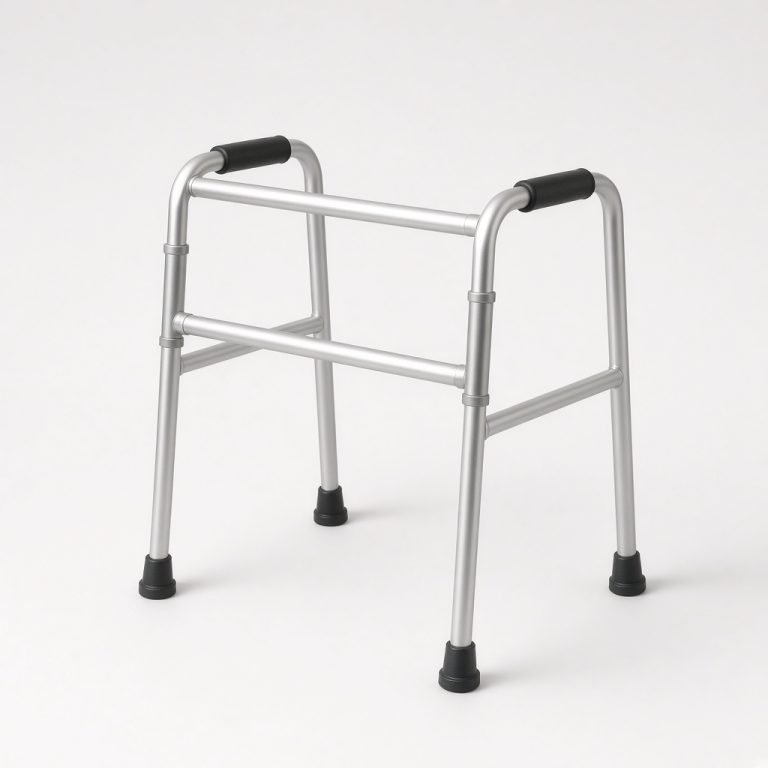
- A rollator rolls. A Zimmer frame is the three-sided frame you lift and step into. If you need to lift each step, see the Zimmer frame guide.
- Three wheels are usually lighter and turn in a smaller space. They almost never have a seat. Four wheels usually add a rest seat and a bit more weight.
- The seat is for sitting still, with the brakes locked. It is not a wheelchair. If someone else needs to push you, you need a different product, sold as a rollator and transport chair, with footrests.
- Measure your doors and your wrist-to-floor height before you order. The number on the box is not always the weight you lift — ask whether the bag is included.
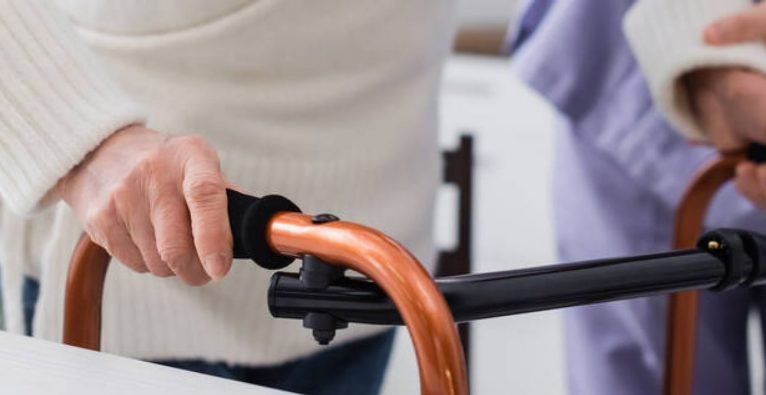
- The NHS groups rollators with walking frames. Height matters. You can sometimes borrow one after an assessment. See NHS guidance on walking aids.
Which kind do you need?
Start with the job. Then check the actual model against your doors, how high the handles need to be, and what you can lift into a car.
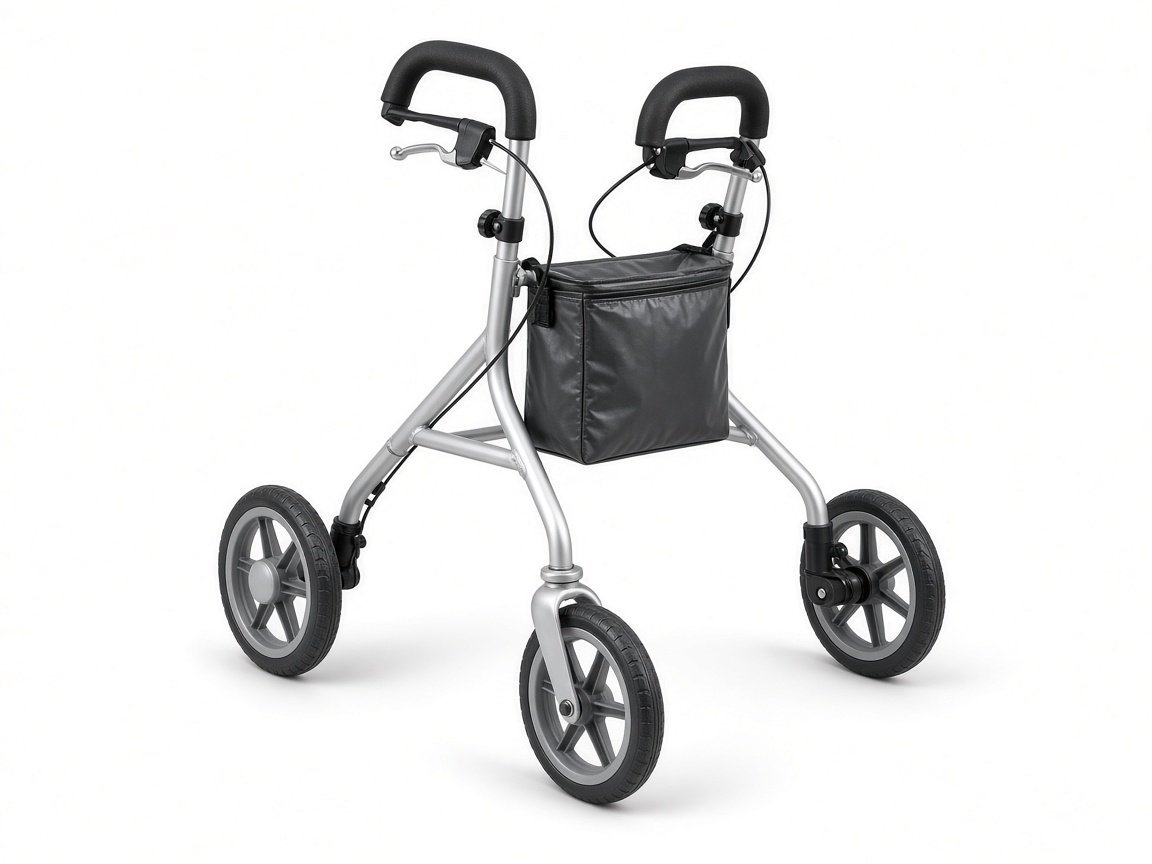
You lift it often, or you turn in a tight hall
- What it is for
- A three-wheel walker. The front wheel turns. There is usually no seat. They are often lighter to pick up.
- What to check
- Measure the widest point against your doors. Can you manage without a seat? Lock the brakes before you stop.
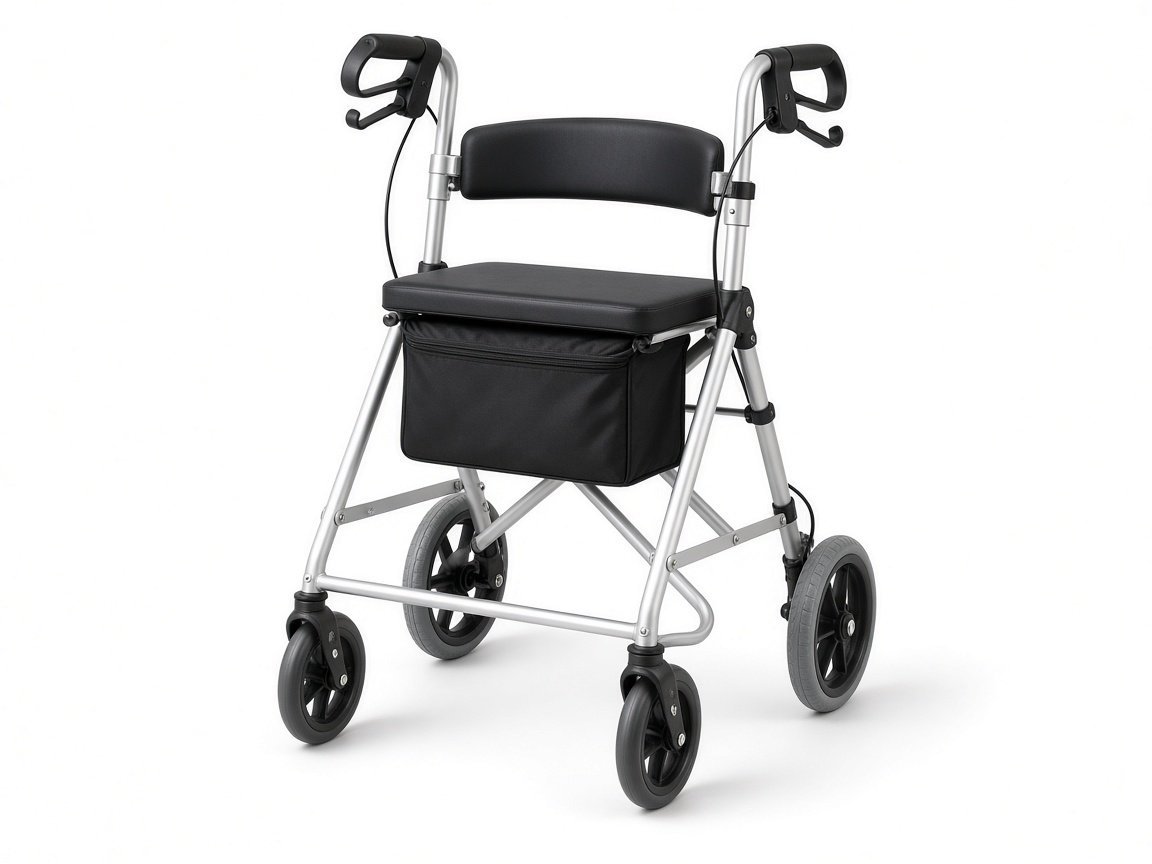
You want a seat for shopping or longer walks
- What it is for
- A four-wheel walker with a small rest seat and, usually, a bag under the seat.
- What to check
- Seat height and width. The brakes must lock before you sit. Check the folded size in the car.
Someone else needs to push you for a stretch
- What it is for
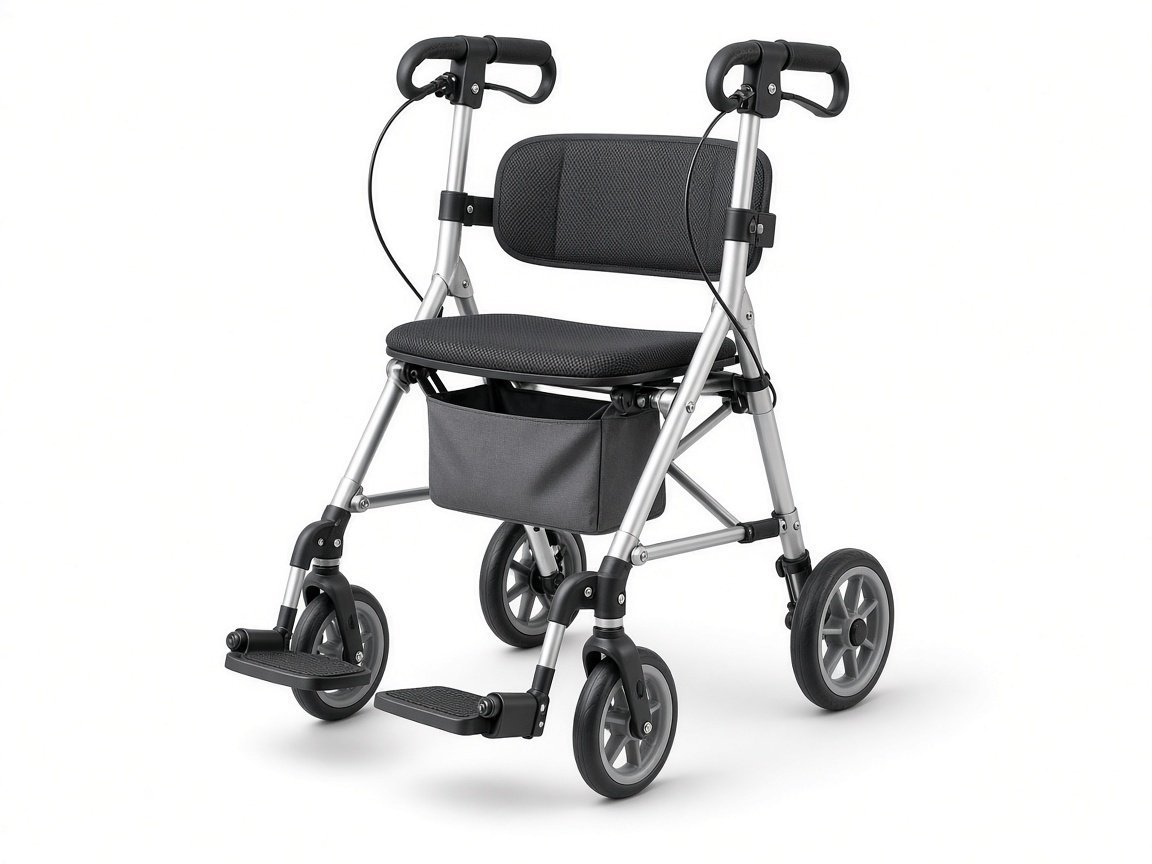
- A labelled rollator and transport chair, with footrests, so another person can push you.
- What to check
- This is still not a full wheelchair. Only use the push-along mode the maker describes, on level ground.
Compare these models
Width, height and weight can differ by colour and seller. Check the model you buy against your doors. Measure from the crease of your wrist down to the floor, in the shoes you walk in. That is the handle height to aim for. The figures below come from the maker’s UK page or instruction sheet.
Drive three-wheel (TW008)
Three wheels, no seat
- What you lift
- 4.7 kg with bag
- Outside width
- 66 cm
- Handle height
- 83–94 cm
- User limit
- 125 kg
NRS three-wheel (S21955)
Three wheels, shopping bag; tray extra
- What you lift
- 5.9 kg listed
- Outside width
- 66 cm
- Handle height
- 81–91 cm
- User limit
- 125 kg
Drive four-wheel (R8)
Four wheels, rest seat
- What you lift
- 6.9 kg
- Outside width
- 63 cm
- Handle height
- 82–97 cm
- User limit
- 135 kg
Homecraft four-wheel
Four wheels, rest seat
- What you lift
- 6.8 kg
- Outside width
- 60.5 cm
- Handle height
- 78–90 cm
- User limit
- 160 kg
Drive three-wheel — light to lift, no seat
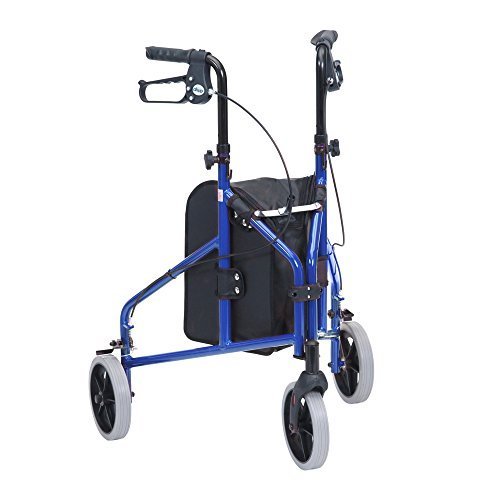
Drive DeVilbiss Healthcare TW008B Ultralight Aluminium Blue Tri-Walker with Vinyl Bag
- Ultralight at only 4.7kg
- Lightweight solid 7" wheels for indoor or outdoor use
- Comes standard with carry pouch
- Arthritic friendly loop brakes
- Handles are adjustable in height
Drive’s TW008 is a three-wheel aluminium walker. The front wheel turns. The brakes lock. There is a vinyl pouch, and no seat. Drive lists it at 66 cm (26″) wide and 56 cm deep, with handles from 83 to 94 cm. Ready to use, including the bag, it weighs 4.7 kg. Folded, the instruction sheet says it is 23 cm thick. The user limit is 125 kg / 20 stone. The bag is rated 5 kg. The wheels are 18 cm (7″) solid.
Choose this if you want the lightest lift in this set and will not miss a seat. Choose a four-wheel model if you need to sit down. Choose the NRS steel three-wheel if you want a proper shopping bag and will accept a heavier lift.
Drive four-wheel — a rest seat, indoors and out
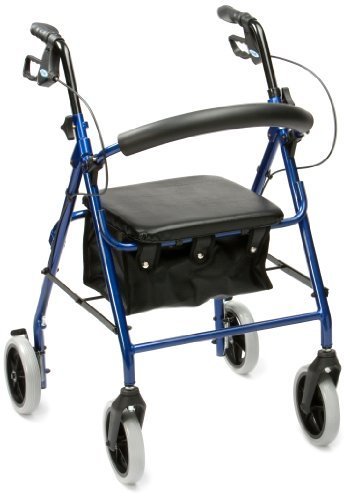
Drive DeVilbiss Healthcare R8 Blue Aluminium Rollator with Padded Seat and Vinyl Underseat Bag <7kg
- Very lightweight at less than 7 kg
- Height adjustable: 33" to 38"
- Anatomic handgrips
- Arthritic friendly loop cable brakes, padded flip - up seat
The Drive R8 is a four-wheel aluminium walker with a padded seat that flips up, a bag under the seat, a curved backrest, and brakes that lock. Drive’s sheet lists it at 63 × 63 cm, handles 82–97 cm (33–38″), seat height 56 cm, product weight 6.9 kg, and a 135 kg / 21 stone user limit. Folded it is 20 × 63 × 82 cm. Drive rates this R8 for indoor and outdoor use. Their smaller-wheeled R6 is indoor only. The bag’s safe working load is 5 kg.
Choose this if you want a seat and a higher handle range. Choose the Homecraft four-wheel if you need a 160 kg user limit and a slightly narrower frame, knowing its handles stop lower.
Homecraft four-wheel — higher user weight, shorter handles
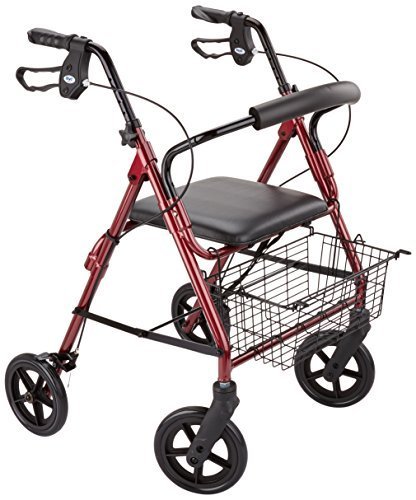
Homecraft Wheeled Rollator Walker with Cable Brakes - Red
- Lightweight four wheeled walking aid with lightweight but strong aluminium frame with a maximum user weight of 160 kg/25 st
- Ruby red colour, simple to operate loop brakes, to secure stopping and lock into place for security
- Height adjustable contoured handles ensure a comfortable ergonomic position while walking to aid mobility
- A padded seat and backrest allows you to easily take a break when you need to. A zippered pocket on the underside of the seat is suitable for storage
- The handy basket for carrying shopping and other items can hang under the seat or can hook onto the front of the frame to allow the rollator to be folded
Homecraft’s ruby four-wheel (code 091169945) is aluminium, with lockable brakes, a padded seat and backrest, a zip pocket under the seat, and a basket that can hang under the seat or on the front so it still folds. Dealer tables that reprint Homecraft’s figures give handles 78–90 cm (30–35.5″), overall width 60.5 cm, seat 53.5 × 35.5 × 31.5 cm, 20 cm (8″) wheels, 6.8 kg, and a 160 kg / 25 stone user limit.
Choose this if you need that higher weight limit or a slightly narrower 60.5 cm frame. Choose the Drive R8 if your wrist-to-floor measurement sits above about 90 cm — Homecraft’s top handle setting is lower.
NRS steel three-wheel — shopping bag, no seat
NRS’s red S21955 and blue S21943 are steel three-wheel walkers with loop brakes and a bag. NRS lists handles 81–91 cm, unfolded width 66 cm, folded width 25 cm, length 59 cm, 5.9 kg, and a 125 kg user limit. The bag is included. If you want a tray as well, that is a separate NRS add-on (S21979).
Choose this if you want a three-wheel with a shopping bag and will lift about 5.9 kg. Choose the Drive three-wheel if a lighter aluminium frame matters more and a small pouch is enough. Sold by NRS and mobility shops.
If someone else needs to push you
Buy a frame sold as a rollator and transport chair, with footrests. Drive’s AirGo Fusion is one; Days and Aidapt sell others through mobility shops. The rest seats on the Drive R8 and the Homecraft are for pausing with the brakes on, not for being pushed around town. Lock the brakes before you sit. Only use the push-along mode the maker describes, on level ground.
Three wheels or four, and when a seat matters
Three-wheel models in this set have no seat. They turn in a smaller space because the front wheel swivels. They are not automatically narrower than a four-wheel. Compare the maker’s overall width, not the wheel count. The current NRS three-wheel is listed at 66 cm, the same overall width Drive quotes for the TW008, but it is heavier (5.9 kg vs 4.7 kg) because it is steel.
Four-wheel models here add a rest seat and, usually, more weight. Drive treats the R8 as suitable indoors and out. That does not make every four-wheel walker an outdoor product. Check wheel size and what the maker says about surfaces. Small solid wheels still struggle on deep gravel or wet grass.
A rest seat is for sitting while you wait, with the parking brakes on, on level ground. Measure a chair height you already find comfortable and compare it with the rollator seat height (Drive R8 56 cm; Homecraft 53.5 cm). Seat width on Homecraft is 35.5 cm. If you need more hip room, look at a two-in-one transport-chair model rather than assuming every four-wheel seat is the same.
A transport-chair rollator is a different product. Someone else pushes you, with footrests fitted, facing the direction the maker describes. Do not treat an ordinary four-wheel rest seat as a wheelchair, and do not ask someone to push you while you sit facing the wrong way.
Will it fit you, your doors and the car?
Handle height is not the same as the overall height of the frame. The gap between the handgrips is not the same as the widest point. Measure the clear opening of every door it must pass — the gap with the door open — and compare that with the maker’s overall width. Then allow a little extra for knuckles and bags.
A common shop method for handle height: stand in usual shoes, arms relaxed, and set the grips at the crease of your wrist. Walk a few steps and adjust. Choose a model where that measurement sits in the middle of the handle range, not right at the top stop. Homecraft’s four-wheel stops at 90 cm. Drive’s four-wheel R8 goes to 97 cm. If you are tall, that extra height matters.
If it has to go in the car, two things matter: how heavy it is to lift, and how much space it takes once it is folded.
Ask what the weight on the box includes. Some makers give a lighter number with the bag taken off. Drive’s three-wheel is 4.7 kg with the bag still on. That is the figure you actually lift.
Folded, that three-wheel is about 23 cm thick. Drive’s four-wheel R8 is about 20 cm thick. Try the fold in the shop, and try locking the brakes, with the hands that will do it at the boot.
Brakes, spare parts and buying
In a shop, lock and unlock the loop brakes yourself. Sit only when they are locked. Fold the frame once. Ask how the cable brakes are adjusted, where spare rubber tips or wheels come from in the UK, and what the warranty excludes. Drive lists a one-year warranty on the TW008 UK page. Other brands differ. A rollator with no UK parts route is a poor everyday choice even if the first price looks low.
Do not use this page as a brake-adjustment manual. If the cables feel slack or the wheels drag, get the seller or a technician to set them before you rely on the frame outside.
This is not every rollator on the market. If you are unsure about balance, ask a physiotherapist, an occupational therapist, or a mobility shop to set the height with you.
Check before you order
- The exact model. The Drive three-wheel has no seat. The Drive R8 and Homecraft do. A transport-chair hybrid is a different product — do not buy a rest-seat rollator expecting footrests.
- Width at the widest point against your tightest door.
- Handle height against a wrist-to-floor measurement in usual shoes.
- What the quoted weight includes — bag, basket, footrests.
- Seat height and width if you will sit. User weight limit: Homecraft 160 kg; the Drive models here 125–135 kg.
- That the brakes lock, that it folds the way you need, and how UK returns and spare parts work.
Shop prices can change.